













HUSK Temperature Test: Why Breathable Horse Boots Matter
The HUSK temperature test confirms that patented HUSK breathable horse boots maintain significantly lower tendon temperatures than standard neoprene and perforated boots. By allowing heat to dissipate through advanced 3D mesh layers, HUSK reduces the risk of overheating, prevents permanent scarring, and ensures rapid thermal recovery during intense equestrian activities.
Why is the HUSK temperature test important for horses?
For competitive horse riders, understanding the thermal impact of protective gear is a matter of long-term health and peak performance. The horse's lower leg, specifically the superficial digital flexor tendon, is highly susceptible to heat-induced injury. During strenuous exercise, these tendons can reach temperatures that lead to cellular damage if the heat is trapped by non-breathable materials. The HUSK temperature test was designed to provide empirical evidence on how different materials influence this thermal buildup.
Neoprene and foam, common materials in traditional boots, acts as an insulator. While it provides excellent impact protection, its closed-cell structure creates a greenhouse effect against the horse's skin. This trapped heat can lead to conditions like lymphangitis, as experienced by the founder's horse, Tia. Our comparative study uses thermal imaging to visualize exactly where heat accumulates and how quickly it can escape when the horse is in motion and at rest.
By prioritizing thermal regulation, we don't just protect the leg from strikes; we protect the internal structures from the silent threat of heat. This is especially critical for high-performance disciplines like eventing, polo, and show jumping, where the physical demands on the tendons are at their peak. At The HUSK, we believe that data-driven design is the only way to ensure the safety of our equine partners.
Key Benefits of Thermal Regulation
- Reduces the risk of tendon cell death (hyperthermia)
- Prevents localized skin irritation and sweating
- Speeds up recovery times after intense schooling
- Minimizes the chance of secondary infections like lymphangitis
- Maintains consistent performance in hot climates

The Science of Equine Thermography and Leg Protection
Our testing methodology is rooted in veterinary science. We utilize high-resolution thermal imaging cameras to track heat signatures in real-time. This process is conducted under veterinary surgeon supervision to ensure that the findings are both accurate and medically relevant. Thermography allows us to see the invisible—the gradual climb of temperature under a boot that might otherwise appear perfectly safe to the naked eye.
During a typical test, a horse is worked under controlled conditions wearing a HUSK boot on one leg and a leading competitor's neoprene boot on the other. After a set period of exercise, the boots are removed, and immediate thermal scans are taken. The results consistently show a "heat bloom" on the leg covered by the competitor's boot, whereas the leg protected by HUSK shows a much more even and lower temperature distribution. This is the hallmark of our HUSK Technology & Environmentfocus.
How does HUSK compare to perforated neoprene horse boots?
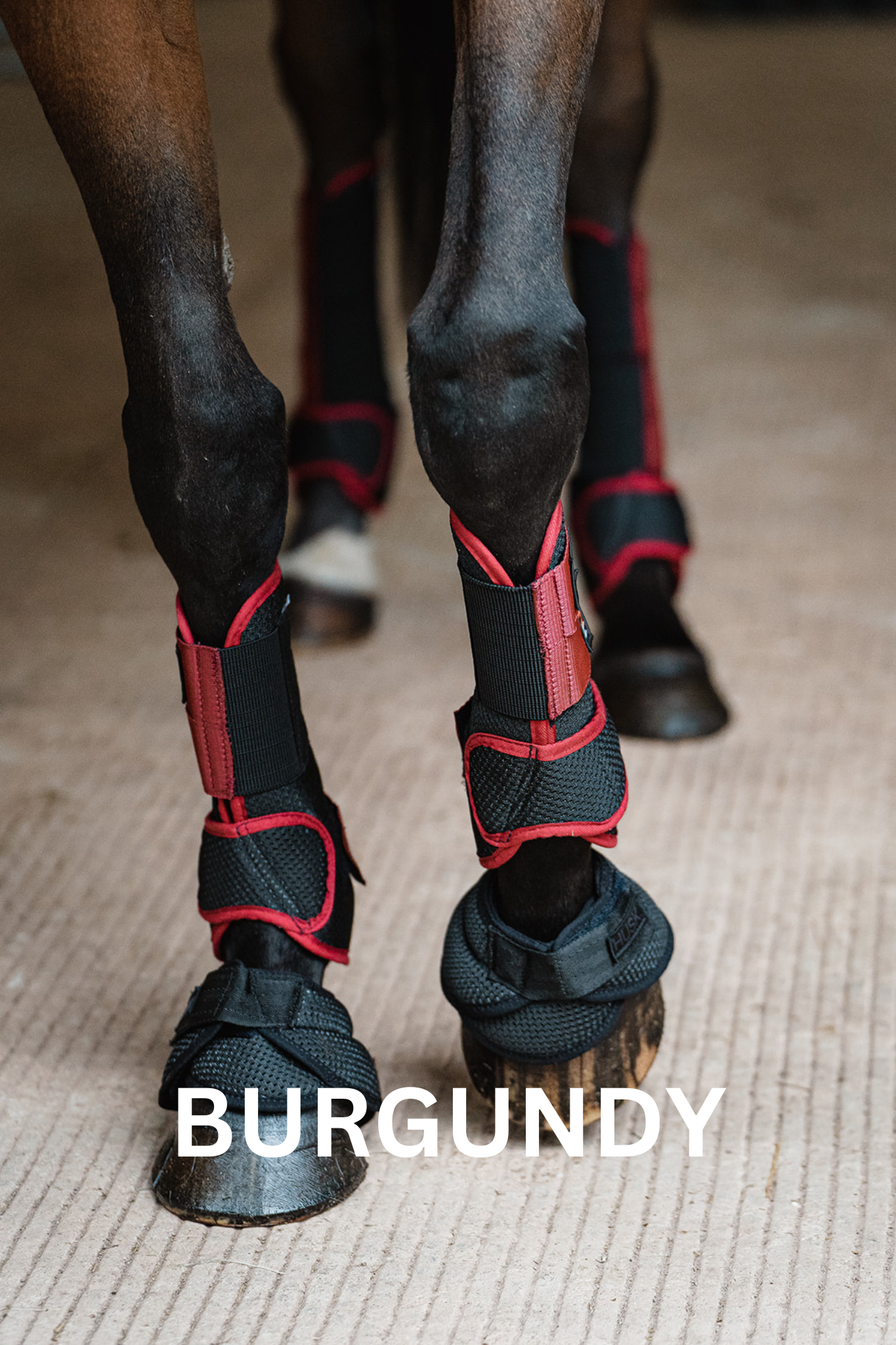
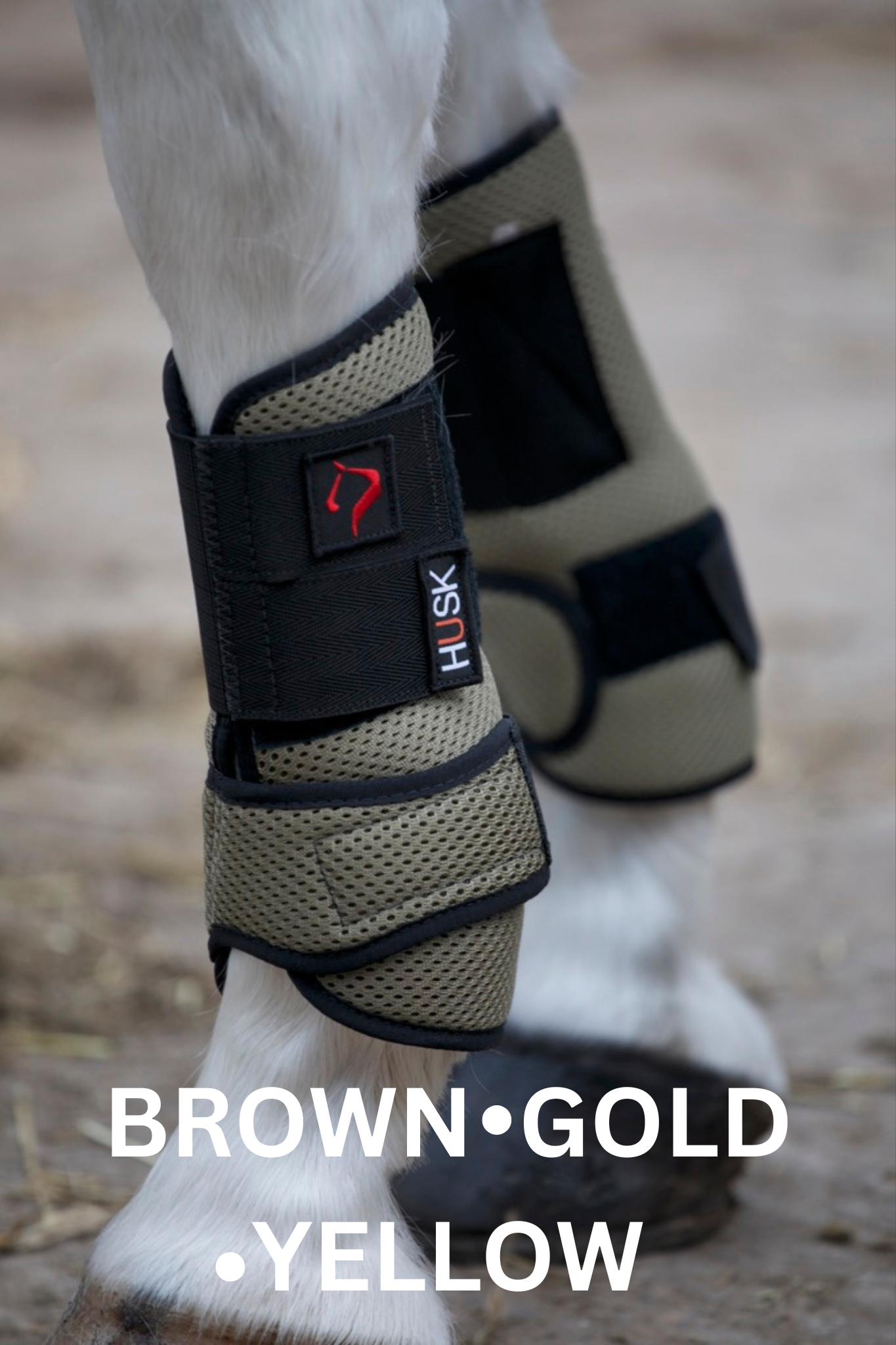
The primary difference lies in the material architecture. Neoprene is a solid synthetic rubber that blocks airflow. In contrast, HUSK uses a patented 3D mesh technology. This mesh creates a physical space between the outer environment and the horse's skin, allowing air to circulate freely. When the horse moves, the pumping action of the limb actually helps to push hot air out and pull cool air in.
- Material: Neoprene is closed-cell; HUSK is open-mesh.
- Heat Retention: Neoprene traps heat; HUSK dissipates it.
- Moisture Management: Neoprene holds sweat; HUSK allows evaporation.
- Weight: Neoprene gets heavy when wet; HUSK remains lightweight.
- Hygiene: Neoprene can harbor bacteria; HUSK is easy to clean.
Because HUSK materials are sourced and manufactured in the UK, we have direct oversight of the quality. This ensures that every boot meeting our rigorous standards also meets the expectations of top-tier competitive riders. You can see our full range of solutions by visiting the SHOP FULL RANGE section of our site. Each product is built with this same commitment to thermal safety.
Results: Competitive Heat Dissipation Analysis
In our most recent comparative analysis, the data revealed a staggering difference in cooling rates. After 20 minutes of intense work, the temperature under the neoprene boot was on average 4 to 6 degrees Celsius higher than under the HUSK boot. More importantly, the cooling-down phase was significantly faster with HUSK. Within 5 minutes of removing the boots, the HUSK-protected leg had returned to a near-resting temperature, while the neoprene-protected leg remained in the "danger zone."
This data is vital for riders who care about the longevity of their horses. Chronic overheating of the tendons can lead to a degradation of the collagen fibers, making the horse more prone to bows and tears. By choosing HUSK, you are actively choosing a preventative measure that goes beyond simple padding. Our science-backed approach is what sets us apart in a crowded market of traditional equestrian gear.
Can breathable boots prevent long-term leg injuries?
Yes, by mitigating the primary risk factors associated with traditional leg protection. Beyond the heat issue, the breathability of HUSK products helps prevent skin conditions that can lead to scarring and permanent damage. When Tia, our founder's horse, developed lymphangitis due to neoprene boots, it was a wake-up call. The skin needs to breathe to remain healthy. When sweat and heat are trapped, the skin's natural barrier is compromised, allowing bacteria to enter and cause significant inflammation.
By using HUSK, you are maintaining the integrity of the skin and the underlying soft tissue. Our products are also incredibly easy to maintain, which further supports leg health. We recommend learning How to Clean your boots regularly to ensure the mesh pores remain open and functional. Clean equipment is a critical component of any horse health regimen.
Why our UK-made technology leads the market
Sustainability and performance are not mutually exclusive. At HUSK, we use up-cycled fabrics to maximize our environmental responsibility. By manufacturing in the UK, we drastically reduce our carbon footprint compared to brands that manufacture in the Far East. This local production also allows us to implement veterinary-led improvements almost instantly. We are not just making horse wear; we are innovating equine safety through a combination of patented technology and British manufacturing excellence. With our fabrics meeting IMPACT ISO test requirements, we are confident that not only do our fabrics manage temperatures, they also protect from impact.
Summary of the HUSK Temperature Test Findings
- HUSK boots are consistently 4-6°C cooler than neoprene.
- Thermal recovery is up to 50% faster with 3D mesh.
- Patented technology prevents the "greenhouse effect" on tendons.
- UK-made quality ensures reliable performance under stress.
- Veterinary-supervised testing validates all heat dissipation claims.
Choosing the right protection for your horse involves looking past the aesthetics and focusing on the science. The HUSK temperature test proves that our approach to breathability is a game-changer for horse health. If you are looking to upgrade your current setup, we invite you to explore our SHOP FULL RANGE to find the perfect fit for your discipline.
